
Chocolate in its natural form is gluten-free. Cocoa butter and cocoa beans have no rye, wheat, or barley. Chocolate powders or bars may contain gluten depending on the manufacturer’s signature recipe. Shared production lines also bear the risk of cross-contamination.
Cadbury’s catalogues are usually not labelled as “gluten-free”. The only way to know the status of individual chocolates is to check the ingredient list and research the production process.
Let me walk you through what I found about the hot chocolate.
How does gluten get into chocolates?
Chocolates are gluten-free if not cross-contaminated. The add-ons in chocolates are the culprits. Pretzels, wafers, cookie pieces, thickeners, and flavourings like barley malt can all carry gluten into an otherwise safe drink.
In other chocolate-derived products, gluten can also show up in fillings or as an enhancer, as I have seen in some chocolate bars.
You might think: the shorter the ingredient list, the less likely you’ll find gluten. But that can be very far from the truth when you look deeper.
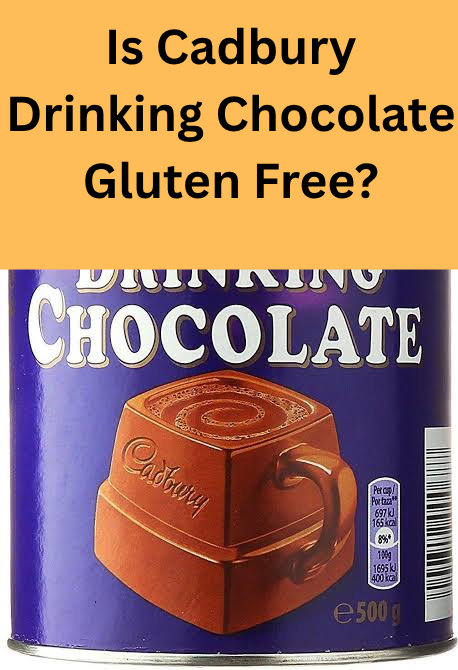
Is Cadbury drinking chocolate gluten-free?
Cadbury drinking chocolate doesn’t list gluten-containing cereals or ingredients, but it does not have an explicit gluten-free label.
The 175g Cadbury drinking chocolate sold in the UK lists sugar, cocoa powder, potassium carbonates, and flavouring as its ingredients. “May contain milk” is the listed allergen warning.
A caveat on the UK Cadbury online shop indicates that its products are manufactured in facilities where allergens such as gluten may be found.
I couldn’t find a publicly accessible gluten test result for this drinking chocolate. Going by its ingredients, it is gluten-free. But there is no evidence it contains less than 20 ppm of gluten.
Is Cadbury drinking chocolate gluten-free in Australia?
Cadbury drinking chocolate in Australia lists no gluten-containing cereal as an ingredient. Unlike the UK variant, it lists maize or tapioca starch for a creamier, non-clumping experience.
As a coeliac, the ingredients alone don’t do it. I need to know the chances of cross-contamination. The last time I reached out to Cadbury concerning their honeycomb bar, they caught my attention with a paragraph.
They acknowledge allergen information in their products (bolded or in capital letters). They also acknowledge that some products carry the risk of cross-contamination. Such products bear the “May contain…” labels.
Based on the above reply, we may assert that Cadbury products without allergen warnings, such as “may contain wheat”, may not contain gluten.
While they don’t use “gluten-free” labels, they are never timid about allergen warnings, like those found on Cadbury Crunchie Rocks.
Explicitly Gluten-Free Drinking Chocolates
This list contains brands that make gluten-free drinking chocolates with an actual gluten-free label.
Hersheys’s
Hershey’s Special Dark Cocoa, Hershey’s Dutch, and Hershey’s Cocoa are listed on their gluten-free list. Hershey’s conducts in-house evaluations to ensure these products contain less than 20 ppm of gluten.
Swiss Miss
Swiss Miss adheres to ConAgra’s (its parent company) policy of disclosing gluten-containing ingredients, including those from rye and barley.
Swiss Miss’s pioneering role has made it arguably the best-known hot chocolate mix. The no-sugar and diet varieties are a few of its massive catalogue of flavours. All are considered gluten-free and bear the “gluten-free” inscription on their labels. This can change, so always cross-check the labels.
BariWise High-Protein Hot Cocoa
This brand makes bespoke products for post-bariatric patients. BariWise Hot Cocoa comes in two options: chocolate with marshmallows and chocolate. Both are gluten-, saturated-fat-, and aspartame-free and low in cholesterol.
Injoy Organics
This might be the smallest company on the list, but their flavours do pack a punch: chocolate mint, chocolate, and chocolate orange. All are sweetened with stevia and erythritol, making them a great low-carb option if you’re on a diet or want hot chocolate without compromising your sugar levels.
Hot Cocoa or Hot Chocolates With No Listed Gluten Ingredients
These companies don’t have explicit “gluten-free” labels, but they don’t list gluten-containing ingredients.
Ghirardelli
Ghirardelli offers options such as Chocolate Mocha, Chocolate Caramel, Double Chocolate, and Hot Cocoa with Chocolate Chips. However, they do not maintain a gluten-free list. They also don’t run gluten tests for their products.
Land O’Lakes
Land O’Lakes boasts 12 flavours of its Cocoa Classics. Unlike Ghirardelli, they maintain a gluten-free list. Their Cocoa Classics are not on this list. However, they don’t list any gluten-containing cereals or ingredients. But there may be a risk of cross-contamination.
Nestlé
What do you know Nestlé for? Yeah! A lot of things! Their hot cocoa brand offers three varieties: Fat-Free, Classic, and Classic with Mii Marshmallows. Unfortunately, these products are made on lines or equipment used for processing ingredients that contain wheat.
Drinking Chocolate or Cocoa: Brands to Avoid
- Godiva
- Stephen’s Gourmet Hot Cocoa
- Cacao Reserve by Hershey’s
- Ovaltine (contains barley malt)
- Nestle Mili (contains barley malt)
Final Thoughts
Cadbury’s drinking chocolate doesn’t list gluten-containing ingredients. However, it doesn’t specifically label the product gluten-free.
However, given Cadbury’s policy of labelling their products with a warning when they feel it may have been cross-contaminated, you can have this hot chocolate, but do your due diligence.